When American Ease Meets Mid-Century Soul – A “No-Extra-Effort” Mix-and-Match Experiment
News 2025年9月8日 70
I. Write “laid-back” into the walls
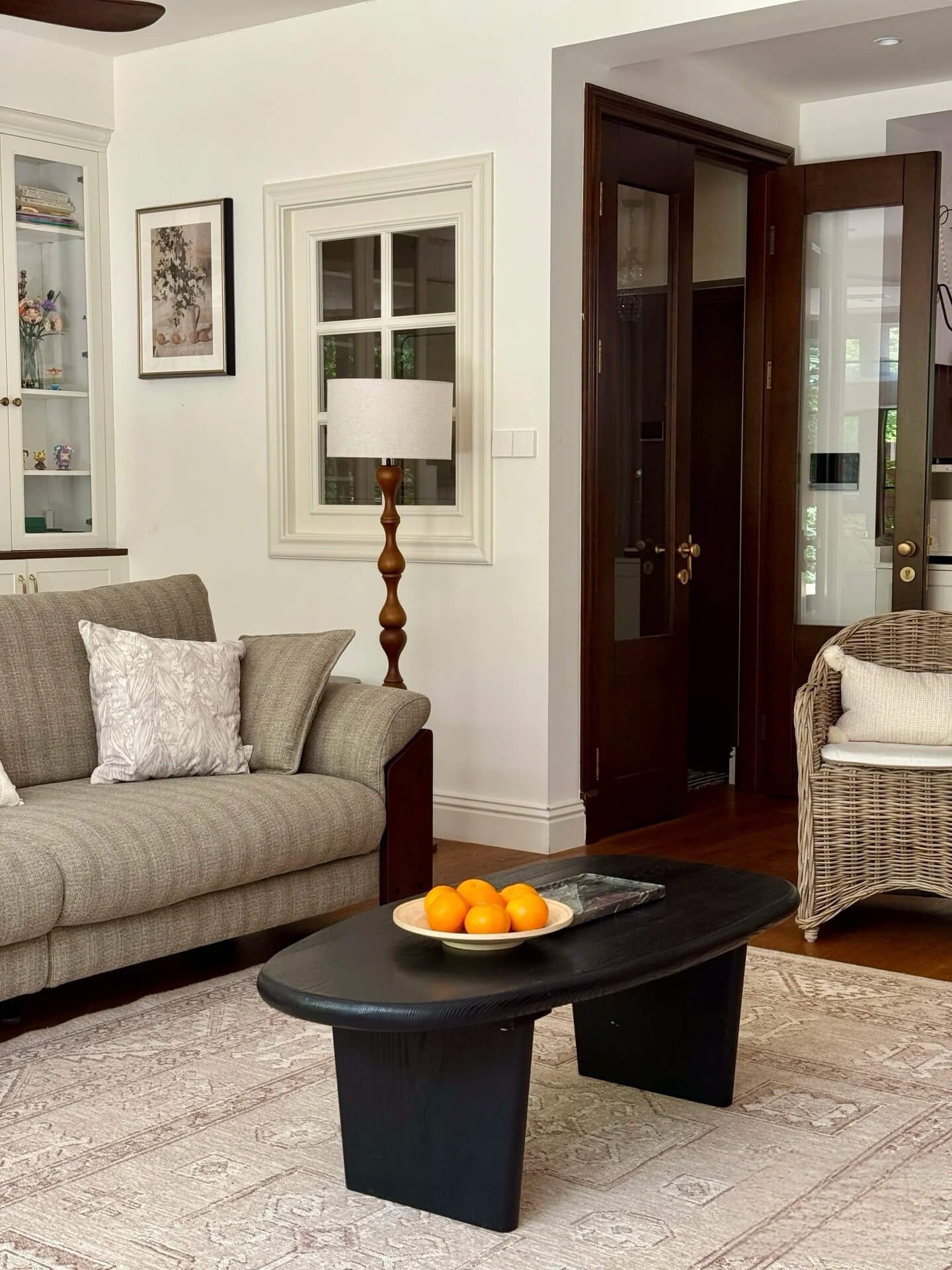
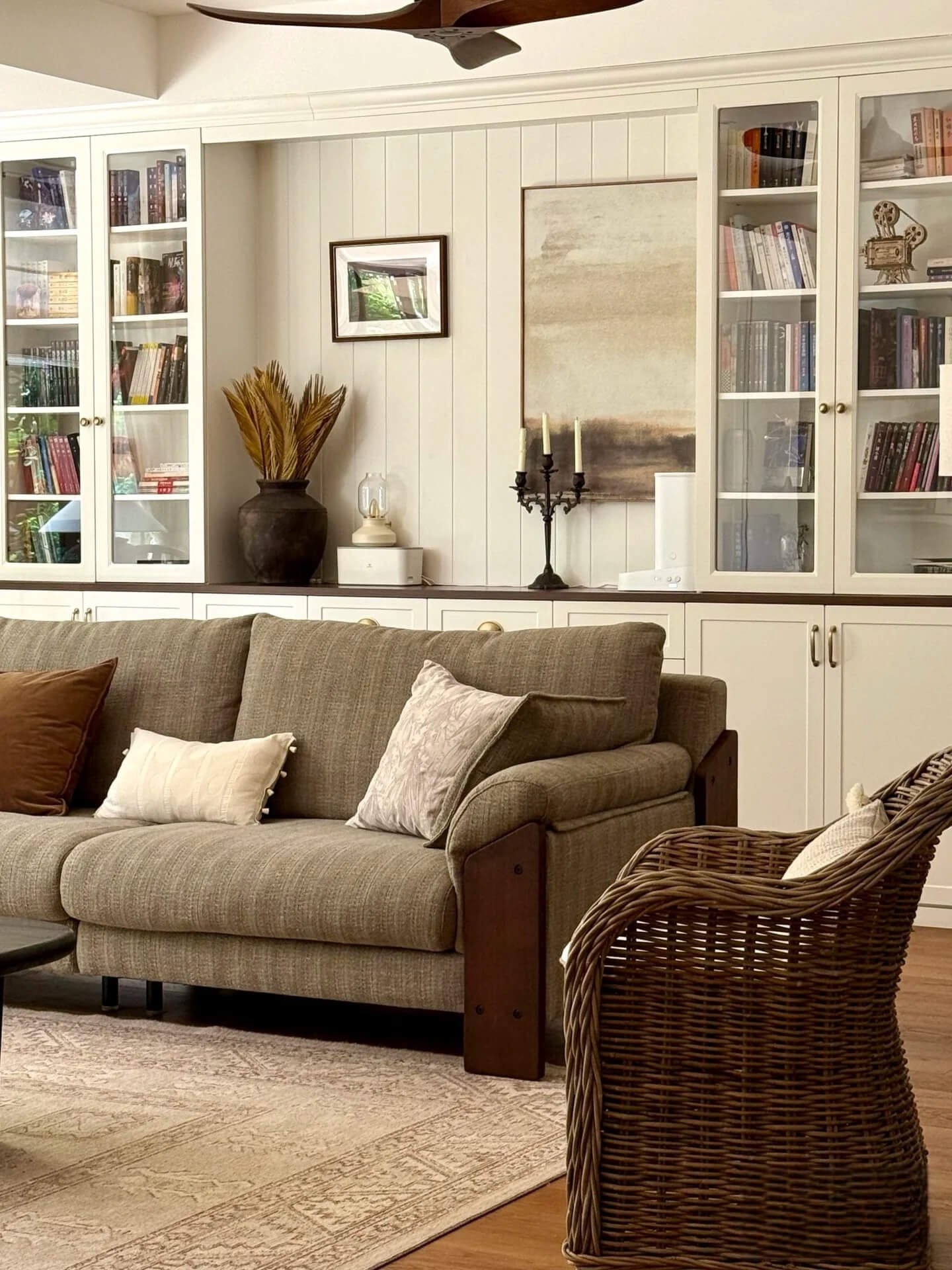
Cream-white is not a colour; it’s a volume knob. It turns the California afternoon sunlight down to mute, letting the low-frequency rhythm of walnut, black iron and linen seep out slowly. We applied three coats of latex paint to “noise-cancel” the walls, then had a 1.2 cm-thick black skirting “cut” a bass line—like the deep groove in an old record, hinting that a 1960s folk track is about to play.
II. Make furniture look “borrowed, inherited”
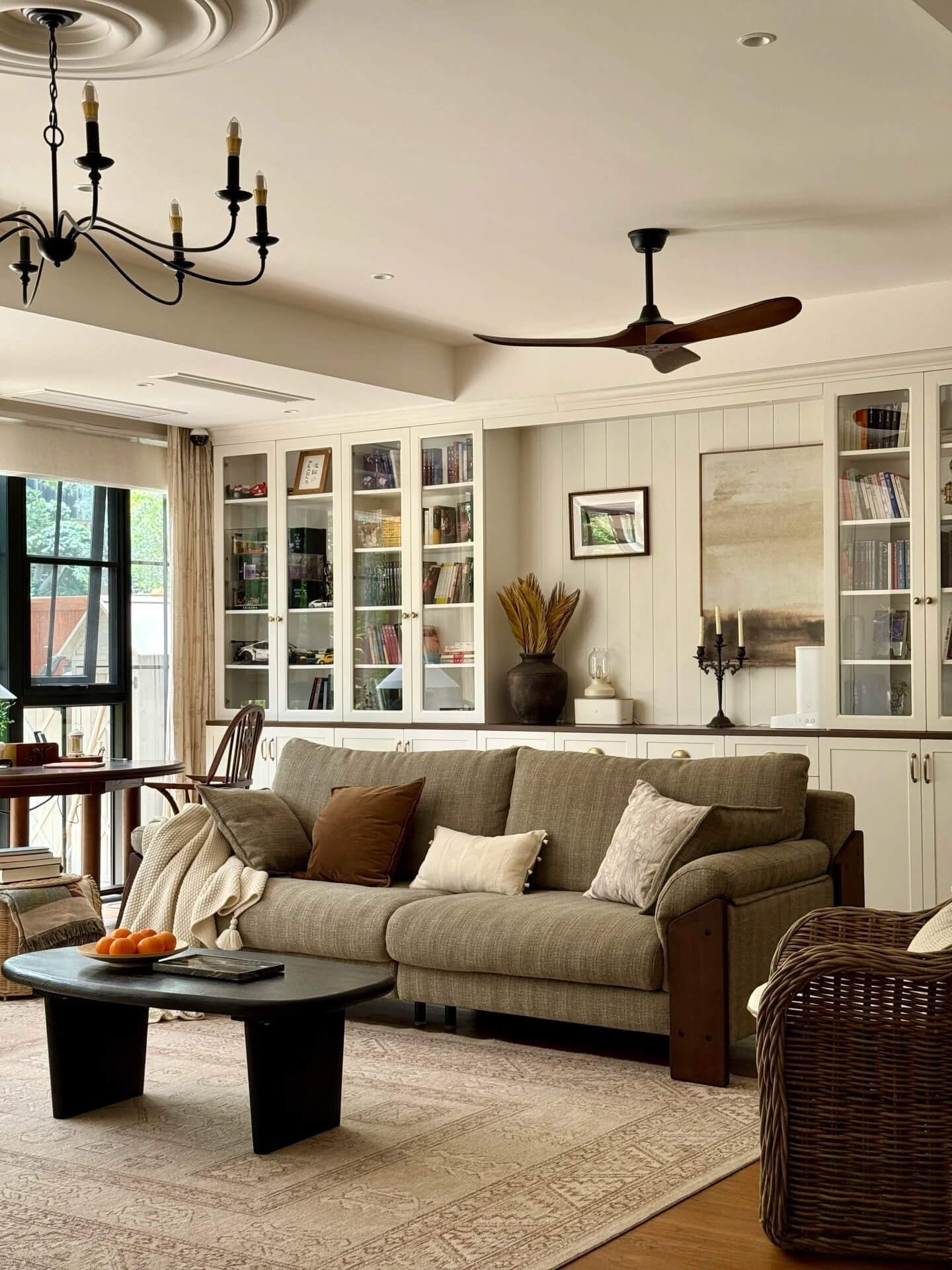
The rule is simple: anything new must look as if it had a previous owner. So we skipped the mainstream sofa and commissioned a local atelier to build an ash-wood frame upholstered in coarse-woven linen. Seat depth: 68 cm; the moment you sink in, you smell your grandma’s attic. Beside it stands a 1960s Danish cane chair—deliberately keeping the slight cracks in the cane as a time-stamp.
II. Black is the “time anchor”
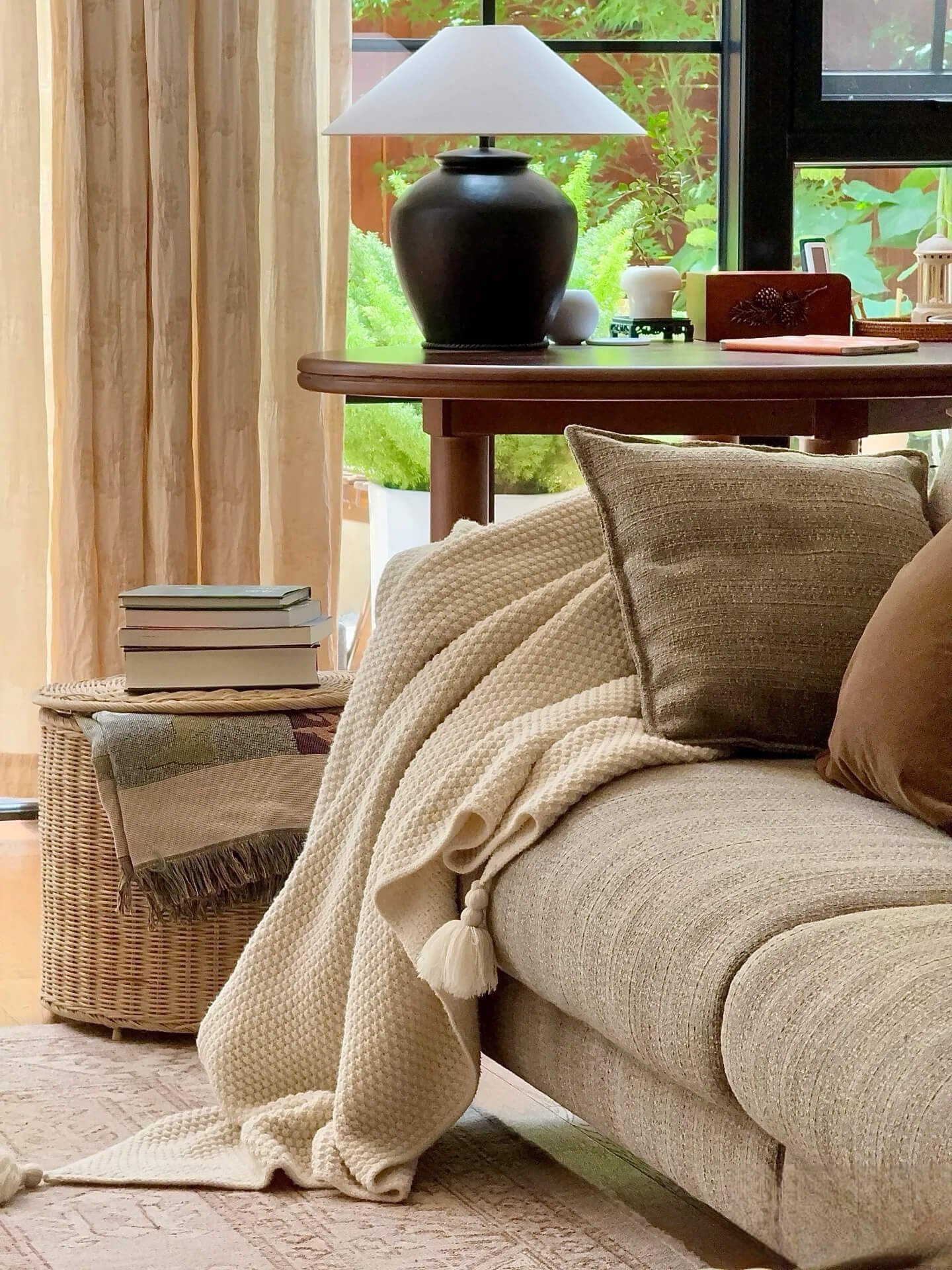
Many American-cum-mid-century projects fail because “too much cream, too little story”. We planted three “black anchors”:
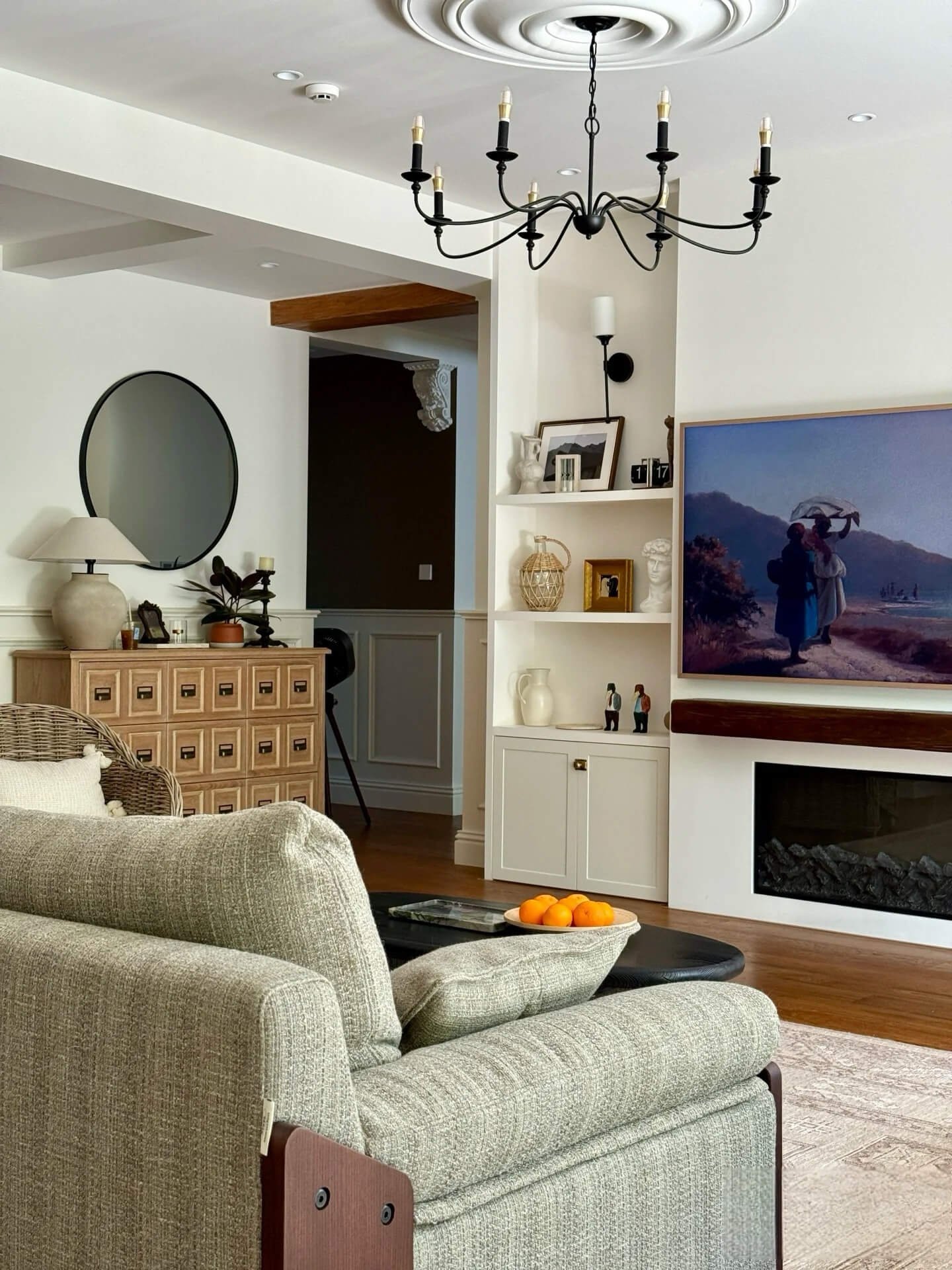
- The firebox re-lined in black micro-cement, downplaying the modern electric flame.
- The kitchen sliding door framed in thin black steel and glass, turning the mid-century sideboard into a movable painting.
- The bed dressed in black sateen—an old film negative by day, a moonlit reflector by night.
IV. Light only highlights “memory”, not “function”
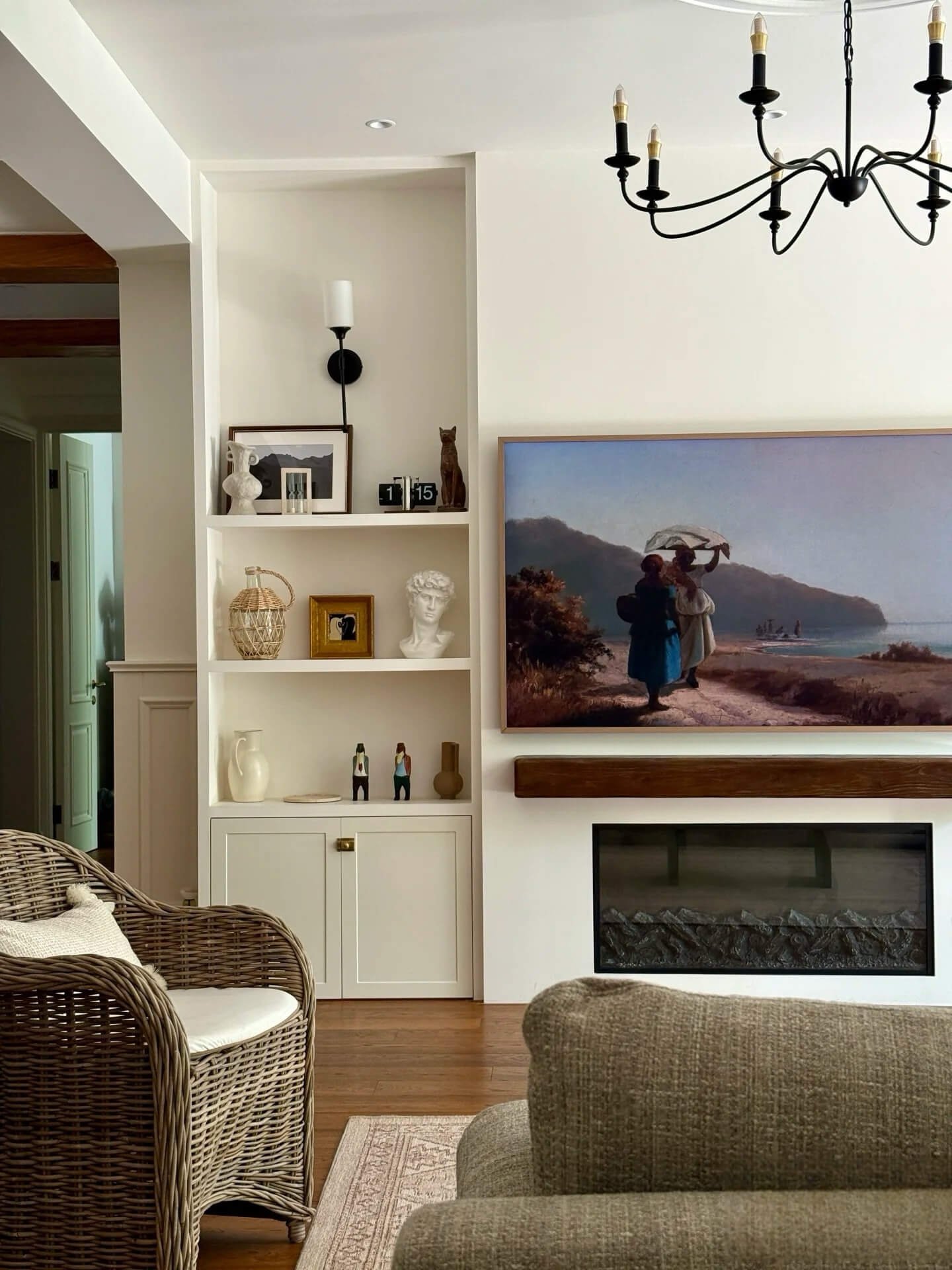
No ceiling down-lights.
A vintage 1970s Italian terracotta table lamp—light hits the inner brass shade first, then spills onto the rough clay, like campfire glow.
Above the dining table a black aluminium track spot, head tilted 30°, illuminates only the deepest crack in the wood.
A 2700 K LED strip hides behind the ash headboard—when it glows, you’re ten years old, secretly shining a torch into the wardrobe again.
V. Decorating rule: 1 new, 3 old, 2 “can’t tell”
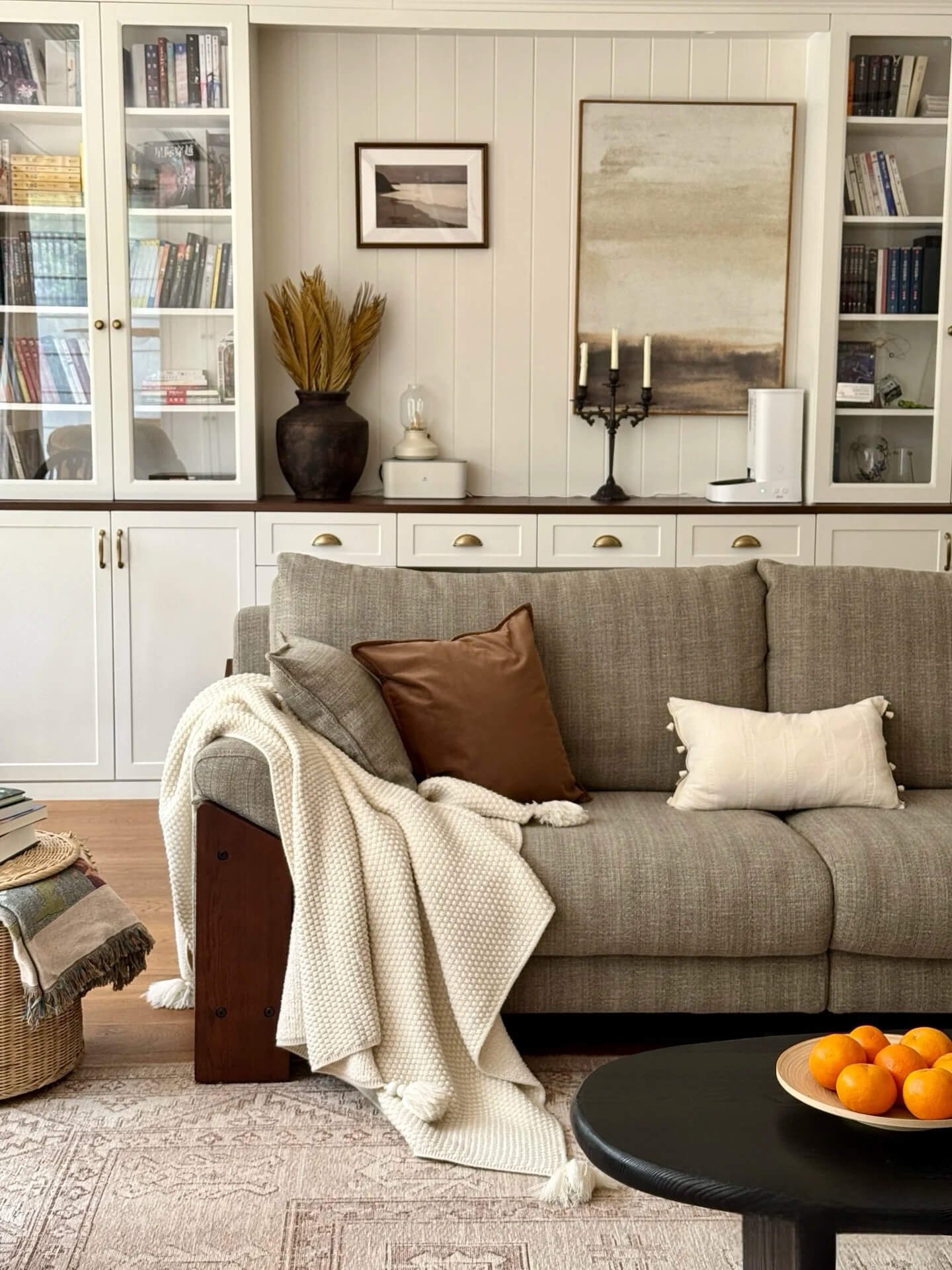
New: Italian Giopato&Coombes bubble mirror—contemporary reflection.
Old: a small Iranian kilim, a French school calendar, a Fujian lacquer tray.
Can’t-tell: a plaster bust cast by our studio, mineral-painted and distressed; looks flea-market Paris, finished last week.
VI. Negative space is “letting air tell the story”
Mid-century “simplicity” is often misread as “cover every wall with collections”. We deliberately left 600 mm of blank wall beside the sofa, hammering in only a 3 cm black horseshoe hook—to hang a hat, or fresh air—so time has a gap to slip through.
VII. Scent & sound: the invisible soft furnishings
Speakers hide in the custom cabinet; playlist fixed: 60 % folk-rock (America, Neil Young), 40 % French chanson.
Scent: Haeckel’s “Seaweed”—faint algae and tobacco, like an old book soaked by seawater; close your eyes and you hear the Pacific Coast Highway.
VIII. The surprise, three months later
The ash sofa grows brighter with use; the linen starts to pill; the black skirting carries thin cat scratches—we left them untouched. Suddenly we understood:
The essence of American-meets-mid-century is not a style formula; it is permission for life to keep writing inside.
New and old, deep and pale, borrowed and inherited, all ferment slowly in the everyday, growing a “third style” that truly belongs to you.
The highest form of negative space is to resist filling the home at once.
Leave an empty chair; let the next story sit itself down.